
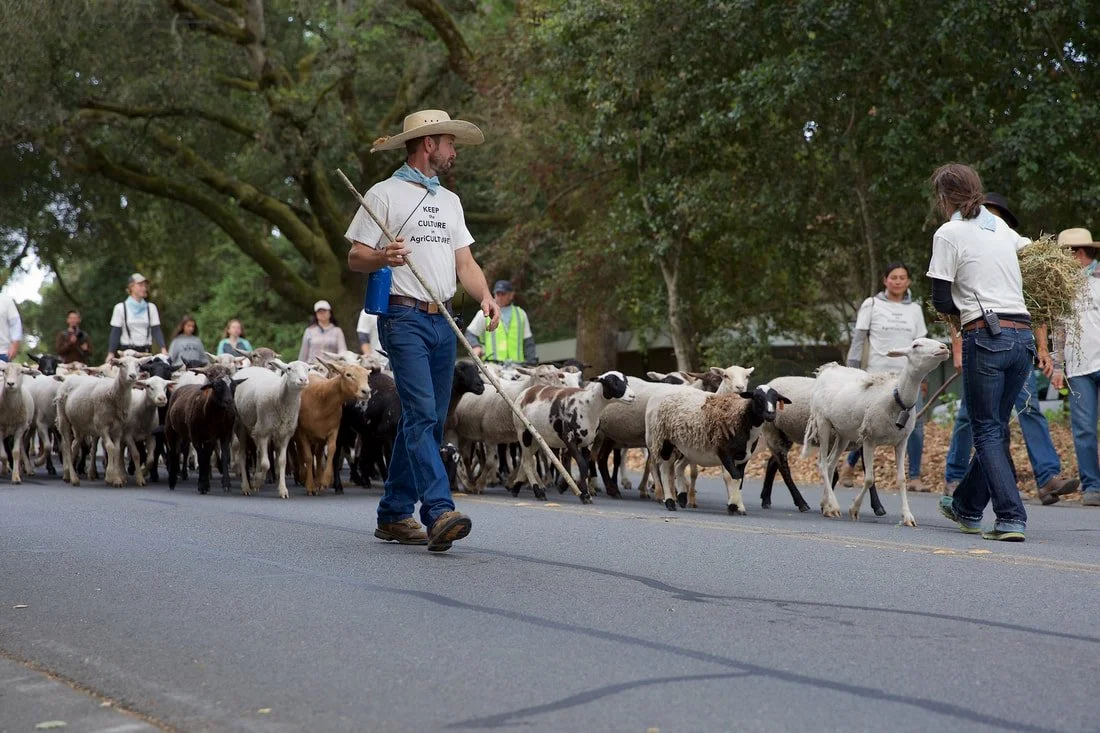
Grazing the commons
A comprehensive, replicable model for ecological grazing that aligns land care with climate resilience, wildfire mitigation, biodiversity, and community well-being, rooted in equity and designed to connect public and private landscapes.
Grazing the Commons — a progressive initiative aimed at transforming how cities in the fire prone regions of the West manage public lands for climate resilience, fire mitigation, and ecological health.
We are currently developing a Grazing Master Plan for Sustainable Vegetation Management and Ecological Regeneration for the City of Petaluma. A key component of this effort is to create a replicable toolkit for municipalities and public land managers to implement prescribed grazing as a nature-based solution rooted in equity and climate adaptation.
Key Goals of the Strategic Plan:
Align public land care with climate adaptation, wildfire risk reduction, and green workforce development
Create municipal contracts that support small-scale agricultural producers and land-based livelihoods
Deliver measurable co-benefits for biodiversity, public health, and underserved communitie
Offer a scalable model that informs local-to-state systems change and cross-sector collaboration
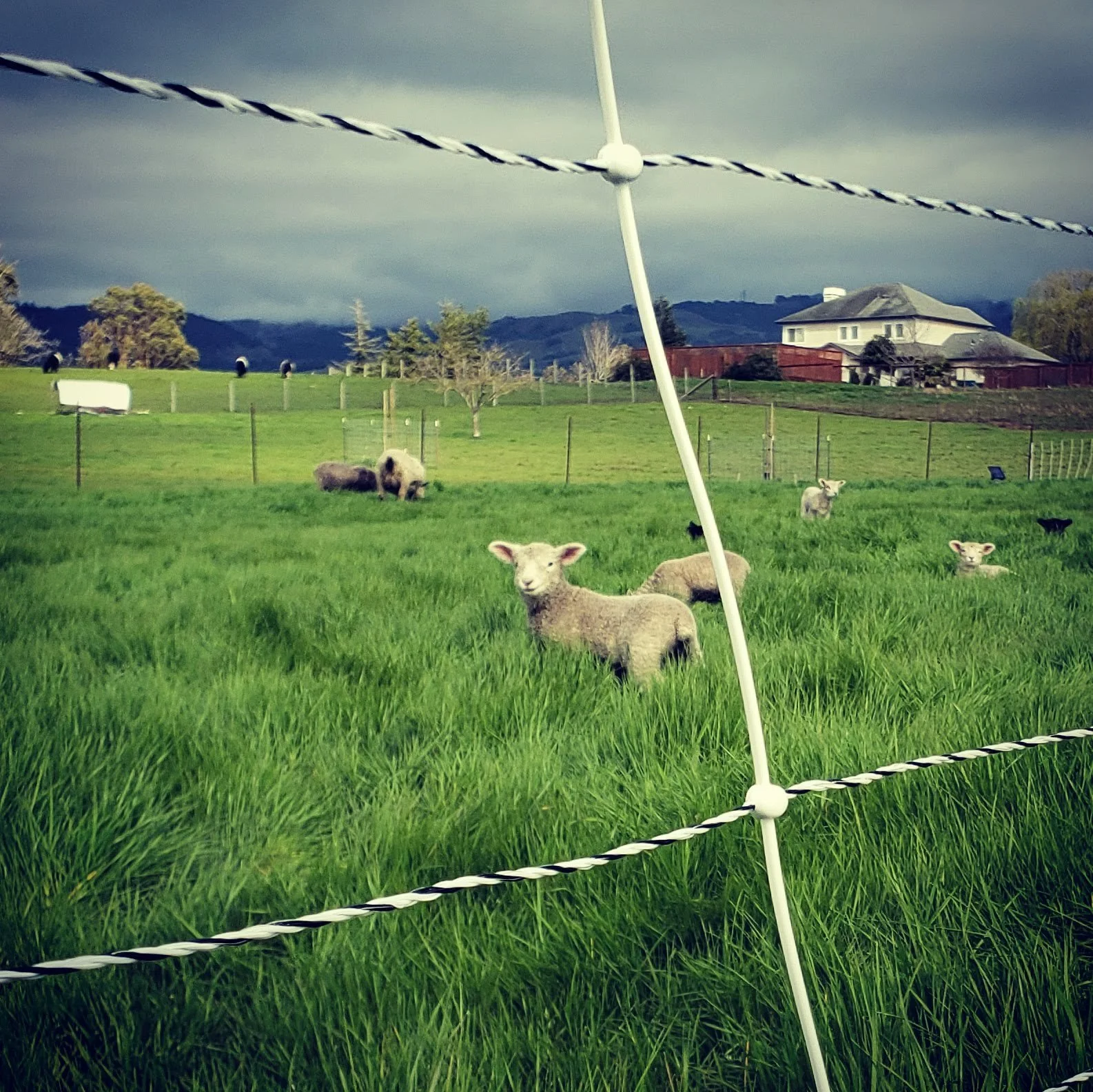
grazing the commons
Grazing the Commons is a first-of-its-kind initiative with the City of Petaluma to align public land care with climate resilience, wildfire risk reduction, and ecological health. Through a comprehensive grazing master plan and open-access toolkit, we are creating a replicable model that supports agriculture producers, delivers measurable community and environmental benefits, and provides cities with practical tools to steward their commons for generations to come.
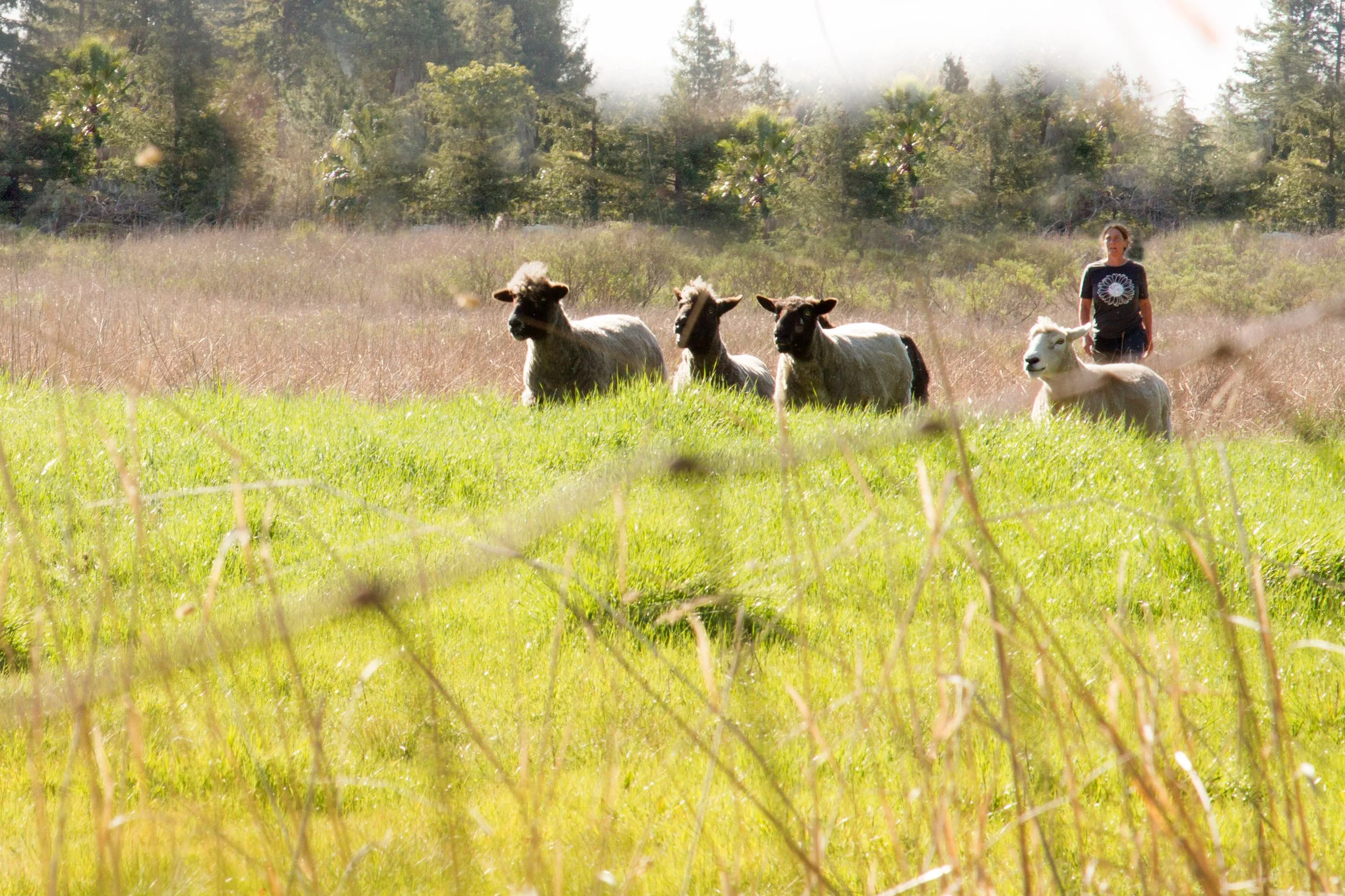
Grazing the Commons is a community-based grazing model that enables public agencies, Fire Safe Councils, and RCDs to use livestock for vegetation management in a way that is fiscally sustainable, socially supported, and operationally realistic.
It bridges the gap between policy, funding, land managers, and working graziers—turning grazing from a one-off contract into long-term shared infrastructure.
The Problem
Public agencies increasingly recognize grazing as a superior tool for:
Fire fuel reduction
Ecological land stewardship
Chemical-free vegetation management
Yet most grazing programs fail or stall because:
Graziers are isolated and under-supported
Agencies lack internal grazing expertise (within their community, network, and organization)
Communities resist or misunderstand grazing
Grant-funded pilots end without durable systems